After the first five flights, the airplane was encouraging but not yet tidy. That is probably the most honest way to describe this first maintenance phase. N22UP had shown good temperatures, good manners, and good promise. It had also shown me enough oil, rubbing, and wheel-pant drama to make it clear that continued flying was less urgent than getting the squawk list under control.
This maintenance block ran from June 19 to July 2 and gave the whole rest of the Phase 1 program a cleaner foundation.
The immediate list after the early flights
By the end of the June flying stretch, I had several problems worth addressing right away:
- Oil appearing around the accessory-case area.
- A nose seal that was clearly not done leaking.
- Interference between the horizontal induction snorkel and the cowl.
- A wheel pant that had not been trimmed generously enough for the tire.
- Smaller cleanup and comfort jobs that were easier to do while the airplane was already apart.
None of those issues, by itself, meant the airplane had failed some dramatic test. Together, though, they told me the right next step was a deliberate maintenance pause rather than a stubborn push for more hours.
First oil change, first evidence
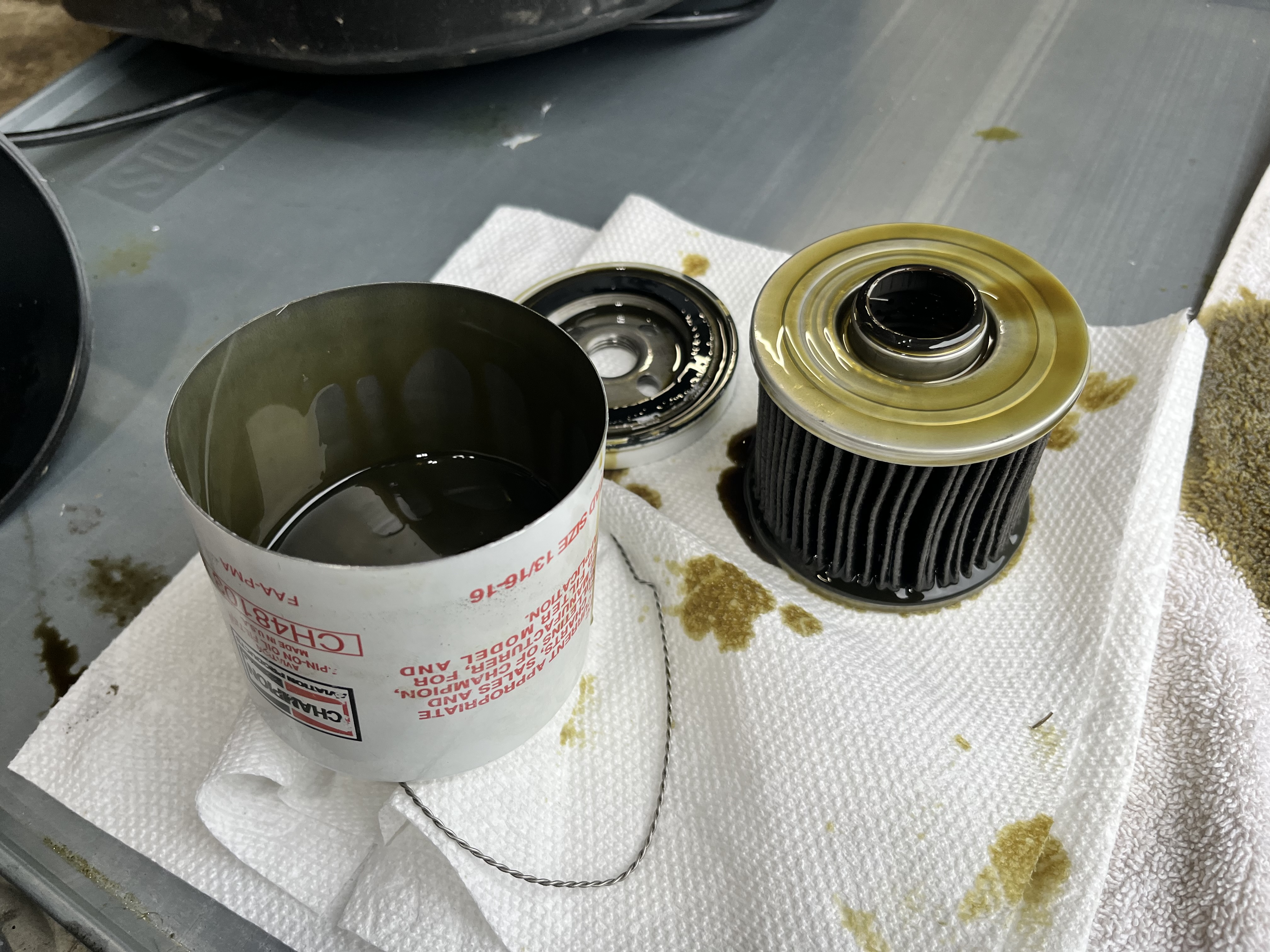
One of the most useful jobs in this maintenance phase was the first oil change at about 6.4 hours. That was early, but intentionally so. If I was already pulling things apart to deal with leaks and access problems, it made sense to look at the filter and see what the engine was telling me.
The filter inspection showed the kind of break-in story I hoped for: visible fines, but nothing that looked like a structural warning. That result does not make for a dramatic headline, but it is exactly the sort of quiet evidence that makes the rest of Phase 1 easier to fly with confidence.
Leak chasing is rarely one clean victory
The oil leak story did not resolve in one elegant step. That is one reason this period is worth writing up as a single narrative rather than scattering it into isolated problem posts.
The first pass focused on the nose seal and the prop-governor oil-line area. Parts came off, the suspect areas were inspected, and a few obvious candidates were addressed. The old o-ring in the prop-governor fitting certainly looked like a worthwhile suspect, and the area around it deserved attention.
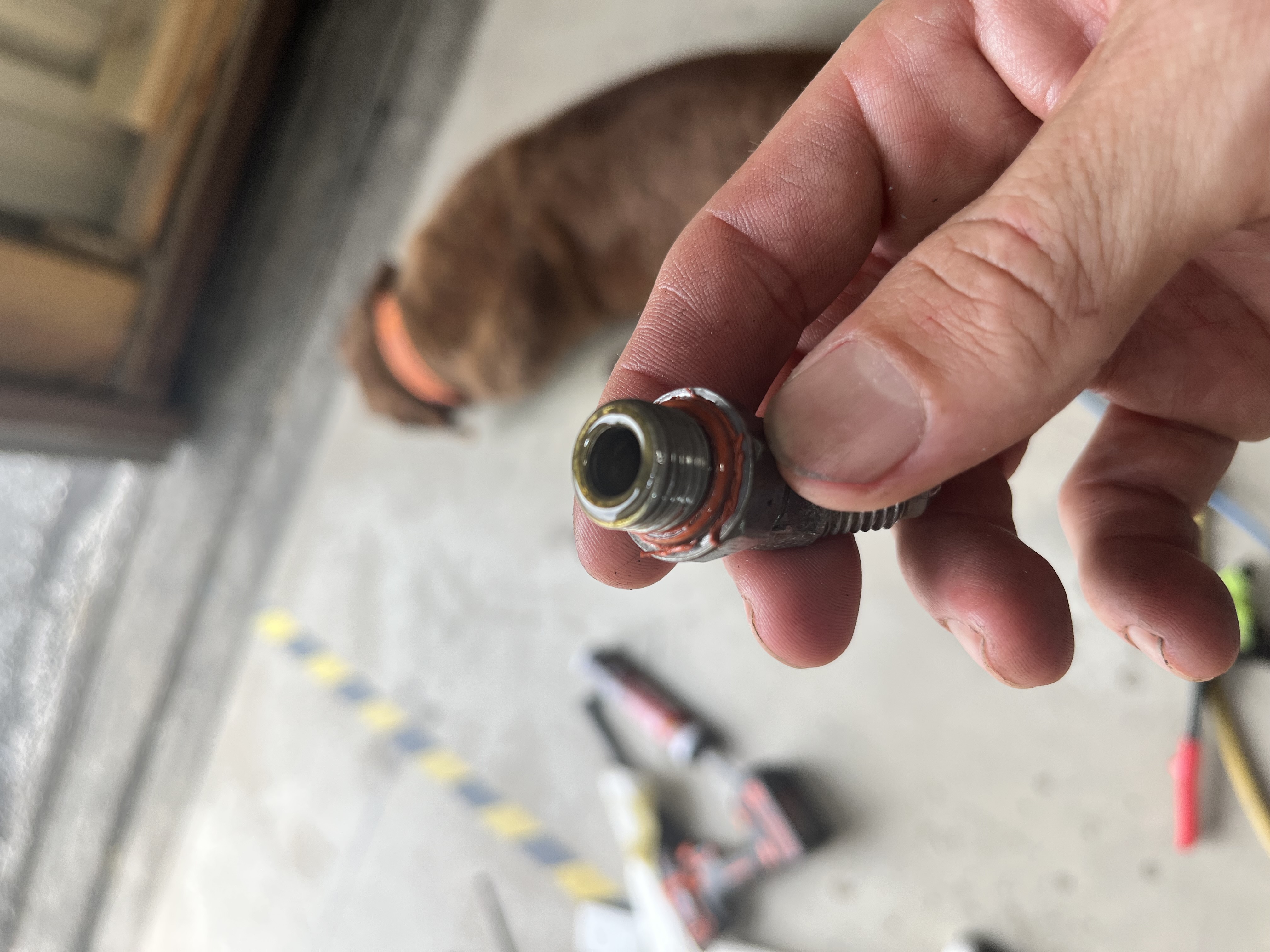
But that did not end the story. What this phase really accomplished was narrowing the possibilities, cleaning up the obvious problems, and setting up the later, more specific maintenance posts. The later write-ups on the snorkel, the nose seal, low oil pressure, and the Part Three leak fix all make more sense when seen as chapters from this same first tear-down rather than unrelated detours.
Airframe cleanup mattered too
This was not only an engine-accessories week. Some of the most useful work was simple airframe cleanup.
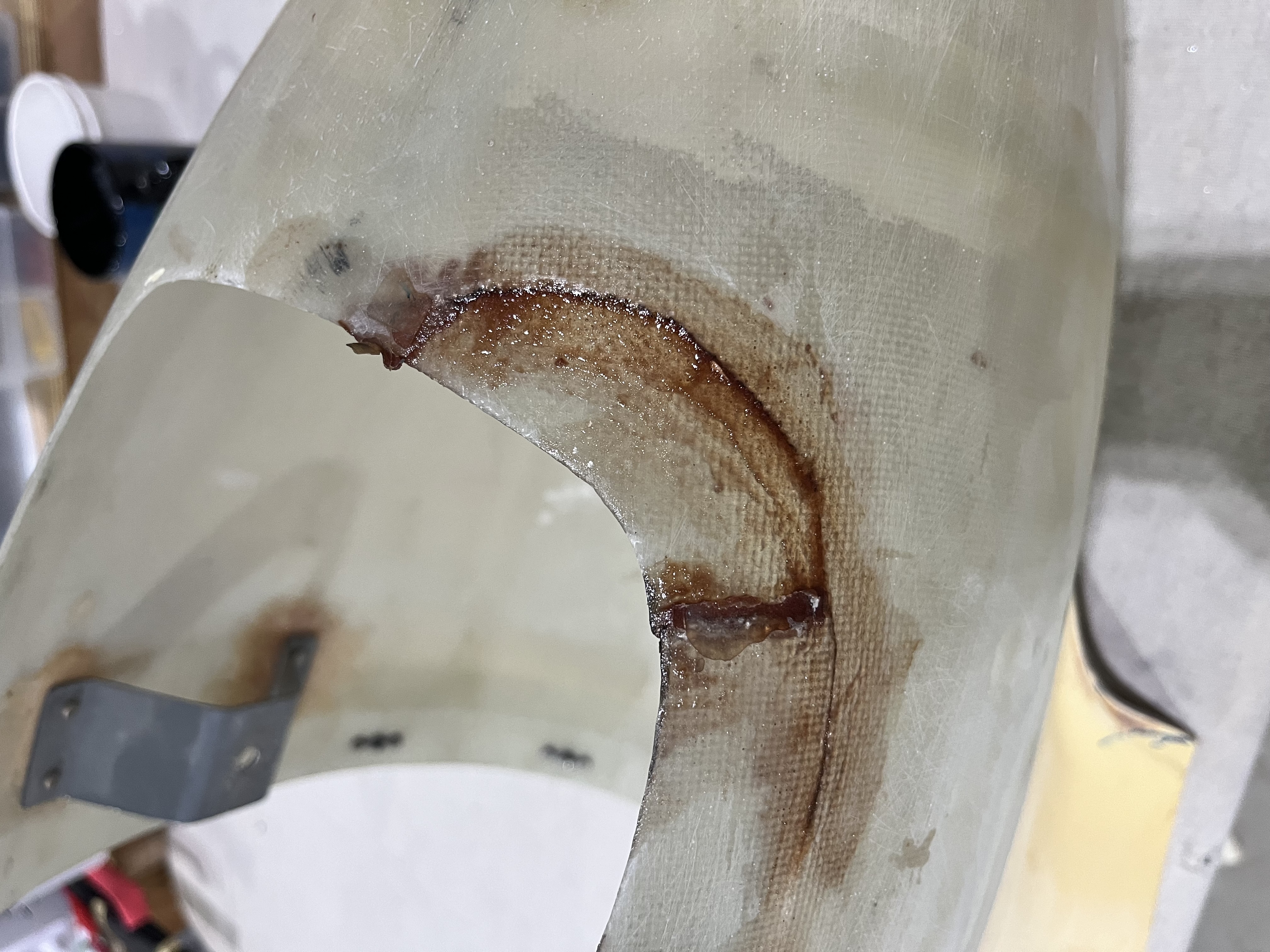
The wheel pant had taken damage because I had not allowed enough tire clearance. That is the sort of mistake that is mildly annoying on the ground and potentially expensive if you keep pretending it is minor. Repairing it early was the right call, and it went hand in hand with trimming for better clearance before the airplane returned to service.
The snorkel also demanded more attention than I had hoped. One relief cut was not enough, and the rubbing evidence made that plain. This maintenance phase did not solve that subject once and for all, but it moved the work from vague suspicion into documented, visible interference that could be corrected methodically.
The June 30 UV-dye run was a useful midpoint
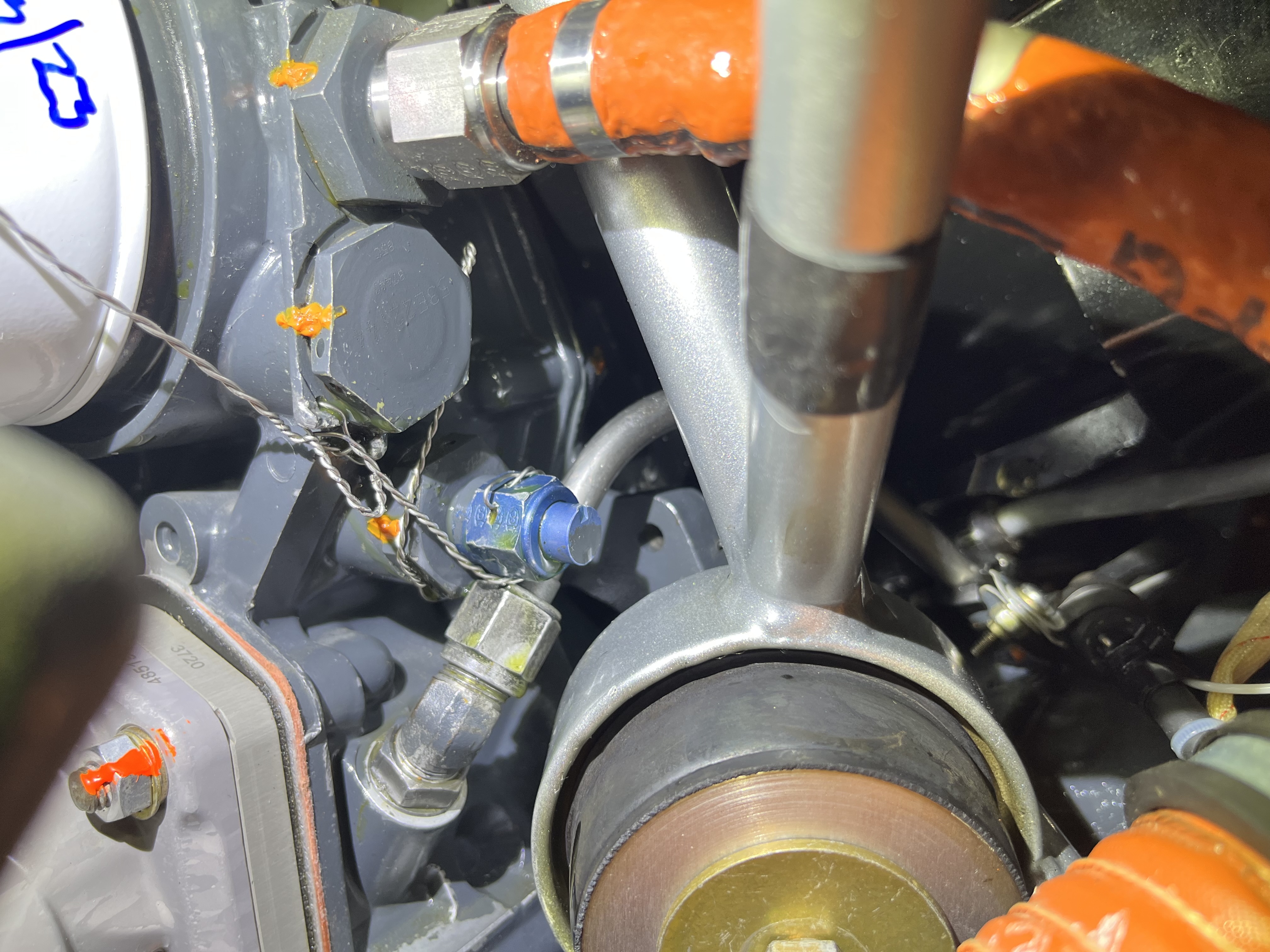
One of the more interesting moments in this stretch was the June 30 ground run with UV dye. It was not glamorous flying content, but it was good investigative maintenance. Running the engine on the ground at 2,000 RPM for several minutes, with the engine otherwise restrained to a controlled setup, gave me another way to isolate where the leak evidence was originating.
That kind of work is easy to leave out when telling the story later, because it is less photogenic than a takeoff or a sunset pattern session. But in practice it was exactly the kind of methodical step that made the later fixes more credible.
Other small jobs that improved the airplane
This same window also picked up several smaller but worthwhile jobs:
- Brake-line shortening.
- Oregon Aero stick boots.
- Seat changes and cockpit cleanup.
- Scat-tube rerouting and general tidy-up work.
- Pre-return-to-flight inspection items that were easier to handle while the airplane was already open.
Taken individually, these are minor. Taken together, they are exactly what a healthy early Phase 1 maintenance pause looks like. You fix the big thing, but you also take the chance to remove five smaller annoyances while access is easy.
What this phase really did
The airplane did not come out of this maintenance block perfect. In fact, some of the later July posts exist precisely because a few of these issues were not fully dead yet. But that does not make this period a failure. It did what it needed to do:
- It preserved confidence in the engine.
- It clarified the leak hunt.
- It improved the airframe condition.
- It got the airplane ready to return to flying on July 2.
That return-to-flight matters because the next chapter is not really a maintenance story at all. It is the point where Phase 1 starts to feel like a sustained flight-test program again, with cleaner data and fewer distractions competing for attention.
From here the story reconnects with Flying & Performance - First report and the larger July flying log, while the more focused maintenance threads continue in Maintenance and Tuning - First report, Induction Snorkel & Oil Cooler Bypass, Nose Seal: Part Deux, Low Oil Pressure, Nose Oil Leak, Part Three, and Oil Change and Misc Maintenance.