The first oil-analysis report on N22UP was useful for the same reason the first compression check was useful: it turned a vague feeling of “this seems fine” into something more concrete.
This sample was drawn on June 23, 2023, after about seven hours on the engine and seven hours on the oil. That is extremely early in the life of a new engine, which means the numbers are less about hunting a mystery failure and more about confirming that the normal chaos of break-in looks normal.
The key numbers
This first report, Blackstone lab number R34374, came back with a pattern I was happy to see:
- Iron: 19 ppm
- Silicon: 30 ppm
- Copper: 10 ppm
- Lead: 426 ppm
- Insolubles: 0.2%
The important reading in context was silicon. Blackstone specifically flagged that as likely coming from sealer, which is one of the classic early-engine explanations. In other words, the report looked like a new engine report, not a sick-engine report.
Their verdict was basically that the engine was on the right track. That was exactly what I wanted from the first sample: not a clean bill of eternal health, because no lab can give that, but evidence that the wear pattern was behaving like a new Lycoming settling in.
The filter mattered too
The lab report is only half of the story. The other half is what the first oil change looked like on the bench.
I cut the filter open during the first maintenance phase because that is the one time when you expect to see the engine’s early housekeeping in the most literal possible way. Bits of harmless break-in debris are much more reassuring when you have actually looked at them.
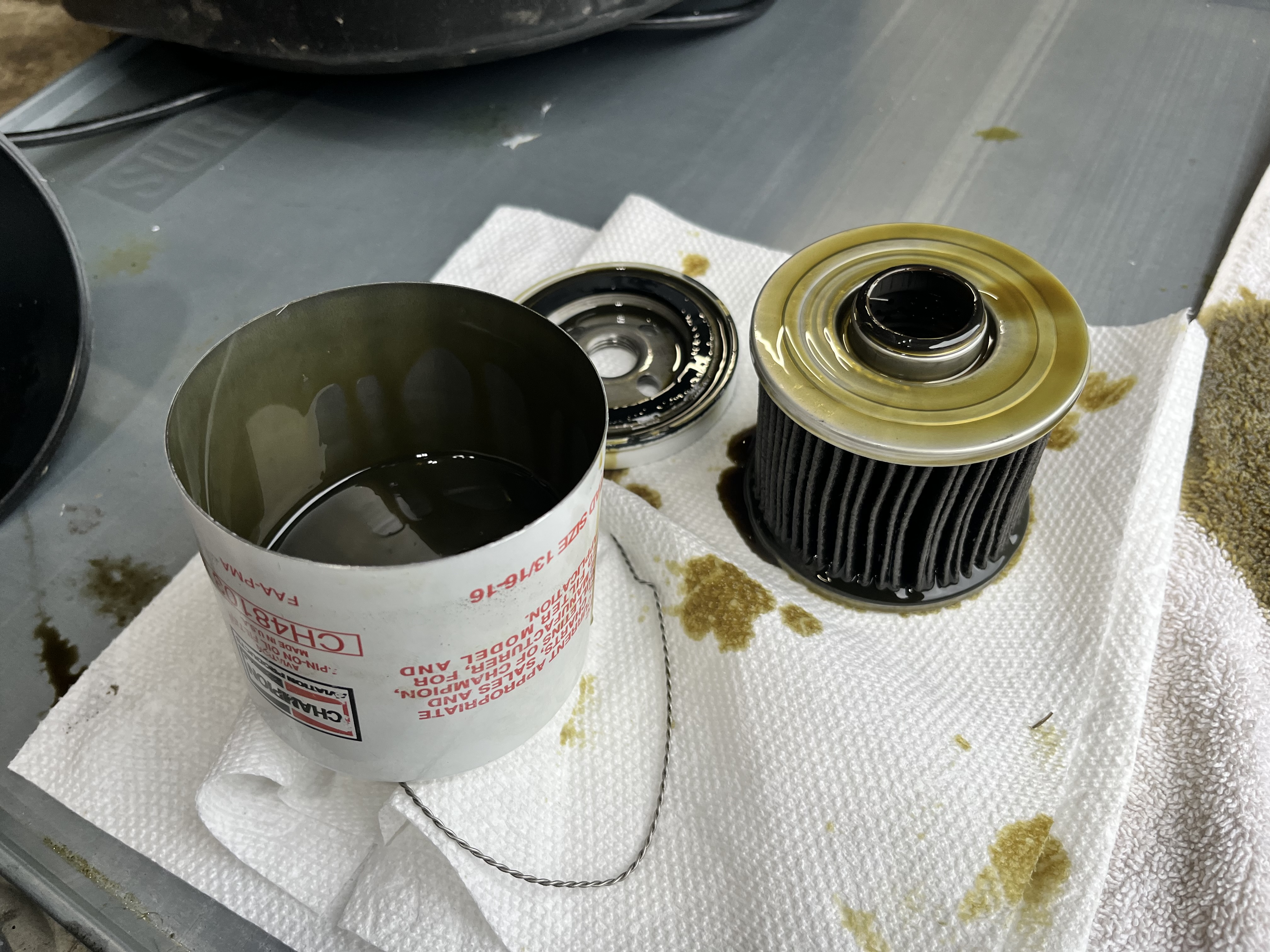
What mattered was not perfection. What mattered was that nothing in the filter suggested an engine starting its life in distress.
Why this sample was worth doing early
There is a fair argument for spacing oil analysis farther apart. With a brand-new engine, though, I wanted an early baseline more than I wanted long-interval efficiency. This report gave me three useful things:
- A starting point for the trend.
- Reassurance that the break-in wear looked ordinary.
- A reference against which later samples would be much more meaningful.
That third point is the real value. One oil-analysis report can tell you a little. A sequence of reports can tell you a story. For N22UP, the story became much clearer when the later reports showed iron, silicon, and copper all trending down together.
What I took from it
The first Blackstone report did not make me relax and stop watching the engine. It did something better: it gave me evidence that the engine was behaving like a healthy new engine, while the rest of the airplane still worked through its first-phase squawks.
That is a good early Phase 1 combination. You want the maintenance list to get shorter, but you also want the core engine story to look boring in the best possible way.
The later two reports make that trend much easier to see, which is why this post really pairs with Blackstone Reports #2 and #3: The Break-In Arc.